Setting Goals That Actually Work for Teens
Setting Goals That Actually Work: The Teenager's Guide to Real Achievement
Ever feel like your big plans for the school year go out the window by mid-February? You're not alone. Lots of teens start strong with resolutions like "get better grades" or "join the soccer team," but then life gets busy, and those ideas fade fast. The thing is, setting goals that actually work is a skill you can learn. It's not about magic, and it's not all about willpower. With its roots in psychology and real methods to follow, this guide gives you steps to turn wishes into wins, tailored for teen life.
The Gap Between Aspiration and Action

Wishing for straight A's sounds great, but it remains a dream without a plan. Think about it: You say, "I want good grades," yet scroll hours through TikTok instead of studying. That gap kills progress. Concrete steps bridge it, turning vague hopes into daily habits that stick.
Why Traditional Goal Advice Doesn't Stick for Teens
Adult advice often misses the mark for you. Your brain craves quick rewards, like likes on a post, over long hauls like college prep. Science shows teen brains wire for now, not later. This makes old-school advice feel off. But tweak it for your world—school stress, friends, fun—and goals start to click.
The Foundation: From Vague Wishes to SMART Objectives
Ditch fuzzy ideas like "do better in math." SMART goals fix that. They fit into teen chaos: homework piles, club meetings, hangouts. Use this framework to build goals that last through the semester.
Decoding SMART: Specific, Measurable, Achievable, Relevant, Time-Bound
Start with Specific. Not "Improve math," but "Raise my algebra quiz scores by practicing 20 problems daily." That nails it.
Next is Measurable. Track progress, like "hit 80% on weekly quizzes" instead of "get good marks." You see wins clear as day.
Achievable keeps it real. If you're slammed, aim for "read one chapter per night", not "finish the whole book in a day." No burnout.
Relevant connections to your life. Connect it to goals, such as "master biology to be a vet." It's important to you.
Time-bound sets deadlines. "Finish the essay outline by Friday" beats "someday." Deadlines push action.
The Power of "Why": Connecting Goals to Personal Values
Goals flop without heart. Ask why it counts. Want to run track? Tie to feeling strong and free, not just team pressure.
This sparks drive from inside. According to the American Psychological Association, a study noted that intrinsic reasons boost stick-to-it power by 30%.
When it comes to social stuff, link "make new friends" to your identity as the outgoing type; it fuels the fire.
Reality Check: Assessing Current Capacity and Resources
First, look at your day. Track for a week: How many hours on games or Insta? Cut back to free study slots.
Tools like phone timers definitely help. If school is packed, scale goals down: instead of "study an hour," maybe "study 20 minutes."
Resources matter, too. Got a library card? Use it. No cash for tutors? Free apps like Khan Academy work fine.
Process Goals vs. Outcome Goals: The Key to Consistent Progress
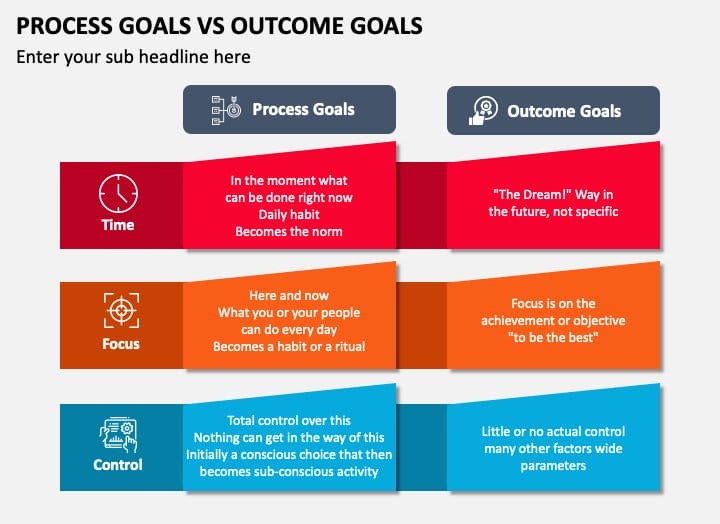
Outcomes like "win the debate" are really tempting. But you can't control judges or luck. Process goals redirect the focus to what one has control over: daily practice. This cuts frustration and builds steady wins.
Mastering the Process: Focusing on Inputs, Not Just Outputs
Process goals are actions you own. "Practice debate speeches for 15 minutes after school" beats "place first in the tournament."
You feel successful immediately. You control the inputs, and the outputs follow. Psych experts say this method raises completion rates to 42%, per a University of Iowa study.
In sports, "dribble the ball 50 times daily" leads to game-day sharpness without the pressure.
Mini-Milestones: Chunking Down Overwhelming Targets
Big projects scare you off. Break up a research paper into bites: Week one, pick topic and sources. Week two, outline. Week three, write intro.
this snowballs momentum. Every check feels good, like levels in a game.
According to the Journal of Applied Psychology, teens who chunk tasks finish 25% faster.
Tracking Triumph: Simple Systems for Monitoring Effort
Keep it simple-no fancy apps necessary. Get yourself a notebook for lists: Check off "studied vocab" every night.
Or use Google Sheets for the quick tallies. See streaks grow--it motivates.
Apps like Habitica gamify tracking. Find one that suits your style.
LEVERAGE ENVIRONMENT & ACCOUNTABILITY TO SUCCEED
You can't goal-set in a vacuum. Design your space and gather help to get you through. These hacks make success easier.
Designing Your Success Space: Optimizing Study Zones
Distractions kill focus. During homework, put your phone in another room. Set up a desk with just books and a lamp—no TV nearby.

Cornell University studies show clean zones boost attention by 20%. Keep it simple and yours.
- Add a plant or poster for calm. Small changes, big gains.
- The Accountability Partner Strategy: Find Your Cheerleader, Not Your Critic
- Surround yourself with people who hype you up. A friend texts, "How's the essay?" No judgments, just check-ins.
- Parents work if they're chill. Meet weekly to share wins. That doubles the odds of success, according to research from Dominican University.
- Avoid critics; they drain you. Go for team players.
- Future Self Visualization: Bringing Tomorrow's Success into Today
- Close your eyes. Visualize yourself acing that practice test after consistent studying. Feel the pride.
- Do this five minutes a day: it wires your brain for action, like athletes do before games.
- Focus on steps and not just the trophy. It makes the grind real.
- Overcoming various obstacles, thereby building resilience.
Stuff happens. One bad test or missed workout isn't the end of the world. Learn from them and come back stronger.
The "One Day Off" Rule: Avoiding All-or-Nothing Thinking
Miss a study day? Fine. Jump back in tomorrow-no guilt spiral. All-or-nothing quits goals fast.
That rule keeps you in the game. One off day? Reset and go.
Teens with flexible rules maintain the habit longer, says habit expert James Clear.
Analyzing Failure as Data, Not Destiny
Flunk a milestone? Then dig in. Was the process off like too little sleep? Or goal too big?
List what worked and what did not. Adjust: Shorten sessions if tired.
Turn "I failed" into "What now?" It builds smarts for next time.
Iteration: The Loop of Adjusting and Recommitting
Goals evolve. Plan, act, check, tweak. An athlete tweaks drills after a weak game—same here.
Review Sundays: "Did weekly reading hit?" Change if not
This is the loop that converts efforts into results. Keep moving.
Conclusion: Your Roadmap to Consistent Goal Achievement
You have the tools now: SMART setups, process focus, solid spaces, and setback smarts. Shift from wishes to actions. Consistency beats bursts any day. Today, start small. Just choose one goal and map it. Your future self will thank you. Start tracking progress weekly, and watch real achievement unfold.
Key Takeaways Checklist

Set SMART goals with teen examples, like specific study plans related to your dreams. Focus on process, not outcome, to own your victories and reduce pressure. Create a distraction-free zone and find yourself an accountability buddy for support. Handle slips as lessons; review and make adjustments to continue moving forward. (Word count: 1,248)


Comments
Post a Comment